
Market Factors Accelerating the Shift to Soft-Termination
Growing Demand for Fail-Safe Designs
The adoption of soft-termination products is strongly recommended, particularly in battery lines and low-voltage, high-power lines

Increased Importance of Countermeasures for Board Flexure
With the adoption of thicker boards for higher power and the integration of heavy, large components, countermeasures against board flexure have become critical priority.

Smaller Stress from Smaller, Higher-Performance ECUs
High-density mounting not only increases thermal stress on the board but also causes rapid temperature changes (thermal shock) due to the introduction of advanced liquid-cooling systems.

Replacement of Ta/Al Polymer Capacitors
To ensure a stable supply of components and reduce mounting area, there is a growing trend. Toward replacing conventional polymer capacitors with highcapacitance MLCCs. In such cases, soft-termination is increasingly selected to reduce the risk of cracking

Key Features of TAIYO YUDENʻs Soft-Termination MLCCs
VW 80808 Qualified
Adoption of Low-Silver Filler Migration Resistance
-
5mm
Board Flexure Resistance no critical failures under 10mm flexure -
2,000~3,000
Stable Heat Cycle From -40℃ to+125℃ -
Migration Resistance
Ion Migration suppressed In high-humidity
Significantly reduced silver usage while maintaining conductivity, polymer flexibility, and sustainable supply system.
| Type | Old Soft Termination | New Soft Termination |
|---|---|---|
| Component Level Migration Standard Dew Test ISO 6270-2/AEC-Q102-001 |
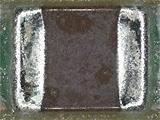
|
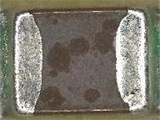
|
| Component Level Migration High Severe Dew Test |
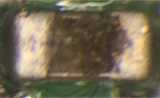
|
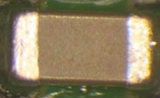
|
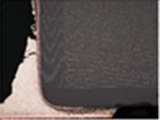
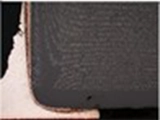
| Temperature Cycle TC180/3,000 cycles |
|
|
Automotive-Grade Lineup - AEC-Q200
| Temp. Char. |
Case size(LxW) [mm] |
Thichness(typ) [mm] |
Reted Voltage [Vdc] |
Capacitance |
|---|---|---|---|---|
| 0.6x0.3 | Under Development | |||
| 6.3 - 100.0 | 220pF - 1uF | |||
| 6.3 - 100.0 | 1000pF - 2.2uF | |||
| 4.0 - 250.0 | 1000pF - 22uF | |||
| 4.0 - 250.0 | 1000pF - 47uF | |||
| 16.0 - 100.0 | 0.022uF - 4.7uF | |||
| 6.3 - 100.0 | 2.2uF - 47uF | |||
More details are available in the white paper.