
Outside Directors in Conversation
Board of Directors’ Oversight and Effectiveness in Consideration of Medium-Term Management Plan 2030
Looking Back at Medium-Term Management Plan 2025
The challenge lies in TAIYO YUDEN’s ability to respond agilely to environmental changes
Hiraiwa: At the time of the Medium-Term Management Plan 2025’s formulation, TAIYO YUDEN had adopted a plan to strengthen production capacity on the premise of growing demand for electronic components. In reality, however, demand did not grow as anticipated, resulting in a mismatch between the timing of sales growth and capital investment. I also view the performance of the devices for communications device business falling short of the plan as a factor in the Company’s failure to achieve its targets. However, I do not believe that the capital investment itself, which was focused on capacitors in preparation for future demand, was a mistake. When demand recovers, upfront investment will serve as a driving force for growth. The important thing will be to identify demand fluctuations with greater precision and strengthen the framework to enable the next initiative to be executed quickly and decisively when changes do occur.
Hamada: The period covered by the Medium-Term Management Plan 2025 saw a succession of unforeseen events, such as the COVID-19 pandemic and changes in the global situation. During that time, the inductor business became a more prominent pillar of growth compared to what it had been five years before. So even in the midst of such challenges, I believe the Company has been advancing the necessary actions, such as implementing structural reforms in the communication devices business, which had been struggling due to significant changes in the business environment.
Koike: As regards the failure to achieve targets, I believe it is important to examine not only the external environment but also internal factors. We had been monitoring changes in business performance and market conditions through monthly reports, and appropriate responses had been discussed at Board of Directors’ meetings. For example, while cutting fixed costs is one measure to improve profitability, it is inextricably linked to the challenge of securing the necessary personnel and production systems for when demand recovers in the future. We therefore engaged in careful and repeated discussions, but the prolonged period leading up to the bottoming out of the demand cycle made it difficult to determine the right timing for a response, a situation that persisted for some time.
What we have reaffirmed through the Medium-Term Management Plan 2025 is the importance of perspective with regard to at what stage to prompt a concrete response when signs of change are detected. I consider this to be one of the significant insights gained by the Board of Directors.
Formulation of Medium-Term Management Plan 2030
Focus was on discussions concerning the feasibility of the implementation plans
Hamada: In formulating the Medium-Term Management Plan 2030, outside directors were involved in discussions from the initial stages by participating in strategy planning meetings, which were led by executive directors. Although there were no major objections to the direction of prioritizing continuity with the Medium-Term Management Plan 2025, the focus of the discussions was the feasibility of the plans presented by each business division.
Initially, the plans presented involved setting conservative targets for the first half of the Medium-Term Management Plan, while aiming to rapidly close the gap with the targets in the second half. If a business division was truly going to achieve a target, clarification was needed, so our question was “When and how will you execute the necessary actions, and what form will they take?” Fleshing out the specific measures and the allocation of management resources required to achieve the Company’s targets formed the focal point of these discussions. Under the Medium-Term Management Plan 2025 we had experienced a situation in which the premises of the plan shifted significantly due to changes in the external environment. It was for that very reason that a key feature of the Medium-Term Management Plan 2030 was that we engaged in in-depth discussions not only on the validity of the targets but also on the underlying assumptions and risks.
Koike: I prioritized two perspectives during the formulation process of the Medium-Term Management Plan 2030. The first point concerned the validity of the economic and social value objectives and the soundness of the methods for achieving them. The Medium-Term Management Plan 2030 is also a plan by which the Company will once again take on the challenges of several targets that were not achieved under the Medium-Term Management Plan 2025. That is precisely why, rather than merely aggregating items, we verified whether the priority measures, allocation of management resources, and execution timelines were logically structured. I view the plan as having a high probability of success.
The second was a long-term perspective with a view toward growth from FY2030 onwards. I engaged in repeated discussions, raising questions that went beyond short-term earnings improvement. My questions covered issues that included whether there were any gaps in product competitiveness and R&D themes essential for future growth, and the timeframes for commercializing cutting-edge research from the R&D Division. I believe that to a certain extent these discussions have been reflected in the Medium-Term Management Plan 2030.
Hiraiwa: Reflecting on the lessons learned from the Medium-Term Management Plan 2025, a key point of discussion was the extent to which the Company could improve the accuracy of its demand forecasting. In addition to the projections from sales divisions, we have now reached the point where we are able to engage in more in-depth discussions than before with regard to the extent to which we can forecast customer demand in specific terms.
Moreover, in response to the long-standing question of whether a strategy relying solely on capacitors was sufficient, the Medium-Term Management Plan 2030 clearly positions both MLCCs and inductors as core businesses. Presenting these two businesses as the twin engines of growth represents a major shift.
To convert technological capabilities into competitive advantage
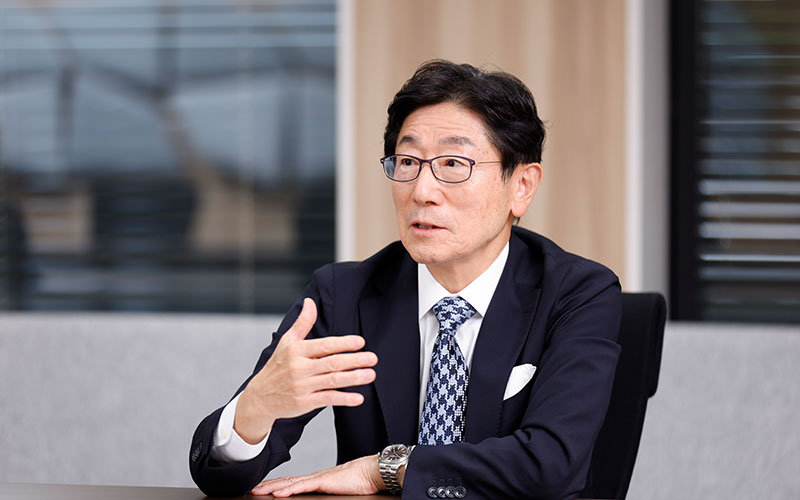
Koike: TAIYO YUDEN has a long history of refining its ceramic materials technologies. Research into barium titanate—the core material for MLCCs—has continued since the Company’s early years. At the present time, the Company is persisting in its efforts to analyze crystal structures at the atomic level and elucidate their correlation with electronic properties. Indeed, this unwavering commitment to materials is one of the sources of the Company’s technological advantage.
In contrast, there are also technological areas in which the Company needs to catch up with its competitors. Having accurately recognized its own strengths and market position, has the Company established development targets and timelines that take into account the pace at which competitors are evolving? As an outside director, I believe it is necessary to view R&D and commercialization initiatives from that kind of perspective.
Hamada: The Company has continued to refine the same core technologies while adapting to evolving applications, ranging from TVs, PCs and mobile phones to today’s AI servers and automotive applications. This represents a major strength. However, on worksites that continue to meet cutting-edge demands, there are aspects where there is operating with limited capacity. Going forward, it will be essential not only to respond swiftly to immediate customer requests but also to anticipate medium- to long-term technological advancements and customer needs. At the same time, sales and R&D will be required to work in unison to delve deeply into the next technological themes.
Transitioning to corporate officer remuneration system linked with Medium-Term Management Plan 2030
Koike: Coinciding with the launch of the Medium-Term Management Plan 2030, in FY2025 extensive discussions were held in Remuneration Committee meetings with regard to a review of the corporate officer remuneration system. The aim was to enhance alignment with the economic and social value targets adopted under the Medium-Term Management Plan 2030 and to further strengthen the management team’s commitment to enhancing corporate value.
Specifically, we increased the proportion of variable compensation and stock-based compensation for executive directors, particularly representative directors. We also changed the performance metrics for performance-linked bonuses to consolidated operating profit margin—a metric shared with employees—thereby establishing a system whereby executives and employees are working toward the same goal. In addition, stock-based compensation has been designed to align with the economic and social value targets set forth in the Medium-Term Management Plan 2030, thereby further strengthening value sharing with shareholders.
We have repositioned executive compensation as an incentive to support the achievement of the Medium-Term Management Plan 2030 and the sustainable enhancement of corporate value, revising the system to place greater emphasis than ever on sharing value with shareholders. I would expect the management team to not only achieve the Medium-Term Management Plan 2030 targets but also pursue results that exceed them.
Board of Directors to Oversee Medium-Term Management Plan 2030 and Governance Challenges
What to watch for as a monitoring board?
Hiraiwa: As its business operations expand, the Company also needs to evolve its governance structure. One of the objectives of transitioning to a company with an Audit & Supervisory Committee in 2024 was to accelerate management by delegating authority to executive directors. At the same time, the Board of Directors needed to fulfill its role as a monitoring board by establishing key oversight indicators and continuously monitoring their levels.
Hamada: It is not only the numerical results that outside directors should prioritize. If a plan is not progressing smoothly, it is important to ascertain where the issues lie at an early stage leading to the necessary discussions. Towards the end of the Medium-Term Management Plan 2025, a certain level of common understanding was reached with regard to the approach to monitoring. Under the Medium-Term Management Plan 2030, we will deepen our discussions from a more multifaceted perspective, incorporating not only internal metrics but also the external environment and comparisons with other companies.
Koike: Under the Medium-Term Management Plan 2025 the challenge of how to respond flexibly to changes in the external environment remained. When identifying signs of change under the Medium-Term Management Plan 2030, it will be crucial to verify whether risk awareness is sufficient, whether countermeasures are appropriate, and whether decisions are lagging behind events. It is my belief that engaging constructively at appropriate times as an outside director is key to enhancing the effectiveness of the Board of Directors.
Challenges in further enhancing board effectiveness
Hiraiwa: One of the challenges ahead is the development of next-generation management talent, and further enhancement of succession planning. We need to continue monitoring whether systematic development is being carried out not only for a successor to the President but also for the broader talent pool that will assume management responsibilities in the future.
Hamada: Although the overall governance framework has been put in place, there is still scope to deepen discussions with regard to human capital. Amid growing interest in human capital across society as a whole, there is a necessity to go beyond merely reflecting this in compensation systems and instead revamp HR systems to keep pace with change.
Koike: For outside directors to engage in management from a high-level perspective and fulfill their role of overseeing execution, robust access to information is also crucial. There are cases where it is not possible to fully grasp the underlying business challenges or the situation at worksites from the materials submitted to the Board of Directors alone. I would like the quality of discussions to be further improved by enhancing and broadening opportunities for business divisions to carefully explain the challenges they face, as well as by means of forums in which outside directors and the management team can share management issues.
Hamada: Following the transition to a company with an Audit & Supervisory Committee, I believe that the audit structure has become easier to understand than before. Furthermore, as the delegation of authority has progressed, the items requiring discussion by the Board of Directors have been narrowed down. Looking ahead, we will be at the stage of evaluating—through monitoring progress under the Medium-Term Management Plan 2030—the extent to which the substance of Board of Directors’ discussions has itself evolved.

Perspectives toward improvement in capital efficiency
Hiraiwa: To increase ROE, the fundamental first step is to improve profit margins. It is important to increase the number of high-value-added products, which are less susceptible to demands for price reductions while maintaining or raising selling prices. In the meantime, cost reduction efforts must be pursued while maintaining an overall balance to ensure there is no adverse impact on quality or supply.
Hamada: From an ROIC perspective, given the capital-intensive nature of ceramic products, it is crucial to establish a global production system that ensures efficiency while maintaining consistently high capacity utilization rates. Balancing product competitiveness that meets customers’ cutting-edge demands with investment efficiency will be a major theme going forward.
Koike: For each business, ROIC tree-based KPI management and portfolio management that utilizes ROIC and sales growth rates are being promoted. In the event that a business remains stuck in a state of low ROIC and low growth for an extended period, the Board of Directors must discuss the matter at the appropriate time to ensure that decisions are not delayed.
Balancing growth investments and shareholder returns
Hamada: In the electronic components industry, halting capital investment leads to a decline in competitiveness. The important thing is to proceed with necessary investments while continuously managing investment recovery and risks, thereby ensuring that investments do not go to waste. While balancing R&D investment and shareholder returns, it is essential to first enhance earnings capacity to generate the funds needed for growth investment.
Hiraiwa: It has been only a short time since the launch of the Medium-Term Management Plan 2030 in April 2026. However, against the backdrop of demand for high-value-added products growing at a pace that has exceeded expectations, the Company has made the decision to implement capital investment ahead of schedule. During a period of expansion, it is important to invest not only in facilities but also in the personnel who can effectively utilize them. I also view the Company’s expressed intention to raise the DOE target in the future as a reflection of the Company’s commitment to prioritizing shareholder returns.
Koike: Also, as regards R&D expenses, in my view investments are being made at an appropriate level. To maintain medium- to long-term competitiveness, it is crucial to balance immediate earnings improvement with investments for future growth, and I will verify the appropriateness of this allocation on an ongoing basis.
Making “wonders of science” source of enhanced corporate value
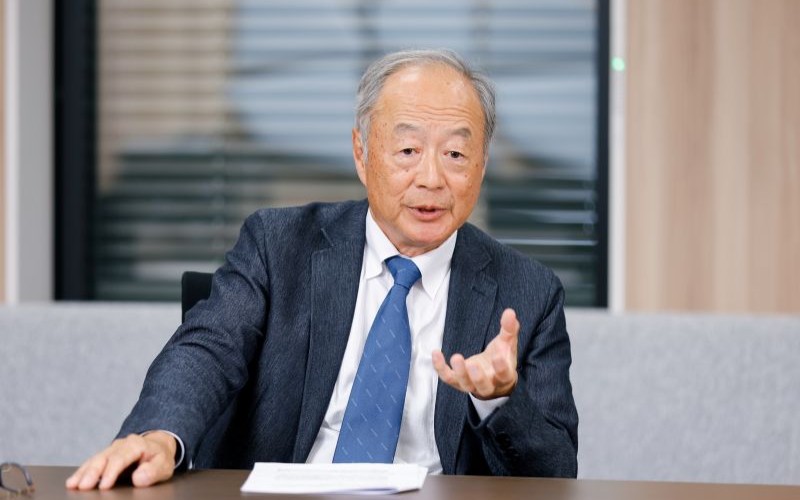
Koike: The Company’s corporate mission—Stronger and more socially aware through the wonders of science—is truly unique. These words express a corporate culture that values intellectual curiosity about science and technology as well as inspiration and serendipitous discoveries. The Company has been pioneering innovative inventions and opened up new fields through “the wonders of science.” However, what matters is supporting a lifestyle that is safer, more secure, comfortable, and convenient—and contributing to the resolution of social issues—through that science and technology. Under the Medium-Term Management Plan 2030, the Company is aiming to realize “sustainable well-being” in society by supporting the evolution of electronics technology in fields such as AI, mobility, next-generation energy, and healthcare.
I consider “the wonders of science” to be the source of the Company’s competitiveness and at the same time the driving force behind its creation of social value. The materials and electronic component technologies in which the Company’s strengths lie possess the potential to assist in resolving a range of societal challenges. I look forward to giving added impetus to these initiatives to realize the value creation outlined in the Medium-Term Management Plan 2030.
Hamada: Even as the times have changed, the Company has consistently continued to fine-tune its expertise in the same technological field while adapting to changes in customer and market needs. My feeling is that this sincerity and single-minded earnestness are the source of the Company’s current competitiveness. Furthermore, a management philosophy that values employees, local communities and shareholders has long been upheld. A corporate culture of this kind is difficult to express in numbers, but represents an important foundation underpinning long-term growth. I believe that continuing to provide the value needed by society and customers—while staying true to its unique identity—will lead to the sustainable enhancement of TAIYO YUDEN’s corporate value.
Hiraiwa: Despite having grown into a company with global operations, the values and corporate culture established at TAIYO YUDEN’s founding continue to be upheld today. I feel that the phrase “the wonders of science” encapsulates not only the Company’s commitment to taking on technological challenges but also its desire to contribute to society.
Under the Medium-Term Management Plan 2030, the Company is aiming to achieve both the enhancement of economic value and the creation of social value. As outside directors, we too will fulfill our oversight responsibilities aimed at enhancing corporate value while continuously monitoring progress and results. The Board of Directors is committed to pursuing highly effective governance so that the expectations of all the Company’s stakeholders can be met.